
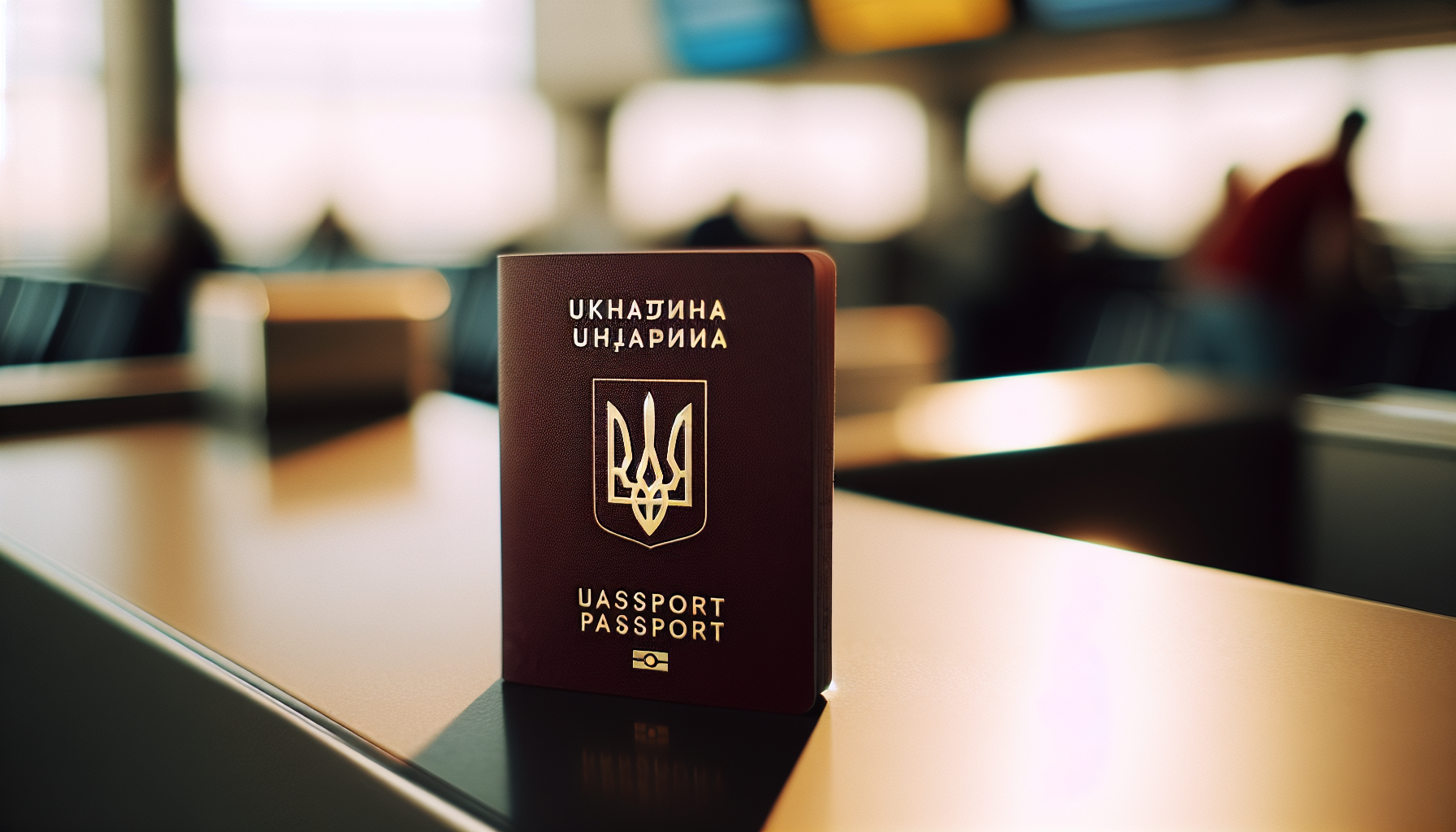
You could say airports are the great equalizers: everyone is tired, everyone is slightly lost, and everyone is carrying a suspiciously large amount of hand lotion. For you — a Ukrainian traveler navigating Philadelphia International Airport (PHL) — the stakes feel a little higher. It’s not just about finding gate C2 or squeezing your suitcase into the overhead bin; it’s about answering a stranger at immigration in a language that sometimes seems to invent new consonants just to make you feel at home. This guide is written in friendly, plain English with Ukrainian hints where it helps, and a little humor where it doesn’t hurt. You’ll get copy‑and‑paste dialogues, pronunciation tips, a compact glossary, and realistic scripts for check‑in, security, immigration, customs, and baggage problems — all with Philadelphia in mind. When you finish, you’ll be able to speak confidently without translating each sentence in your head.


Why this guide is for you
You’re not an English beginner pretending to be fluent; you’re someone who needs to manage real interactions under pressure. That pressure could come from a tight connection at PHL, from a border officer who asks three versions of the same question, or from a bag that decides to stay behind in Newark. This guide avoids long grammar lessons and goes straight to what you will actually say and hear. Each script is short, practical, and includes Ukrainian translations where a single word can save you from panic. You’ll also find polite phrases that Americans expect, so you don’t come off as rude without meaning to. Think of this as the phrasebook you’d wish you had in your pocket — except far less likely to fall into a fountain.
Before you leave home: documents and preparation
Before you leave your apartment and the comforting hum of your kettle, check these things. Make prints or photos of your passport (паспорт), visa (віза), airline ticket (квиток), and any invitation or medical letters. Put copies on your phone and email them to yourself. If you’re traveling on a visa, have the visa page and any supporting documents ready. For ESTA or visa‑waiver travelers, bring your ESTA confirmation email (підтвердження ESTA) and your return ticket.
Practice a few short phrases aloud so they feel familiar. The shoulders relax when your mouth knows exactly where it has to go.
Online check‑in and mobile boarding passes
Most airlines let you check in online 24 hours before your flight. Do it. You’ll pick your seat, print or download your boarding pass, and sometimes avoid a line at the counter. If you have checked luggage, you’ll still usually need to drop it at the airline desk. Save a screenshot of your boarding pass and email it to yourself; airports have unpredictable Wi‑Fi, while screenshots are uselessly reliable.
Pronunciation tip: boarding pass — /ˈbɔːrdɪŋ pæs/ (бордінґ пас). Say it once quickly and you’ll sound like someone who belongs in the terminal.
At the airline counter: check‑in scripts and tips
When you get to the carrier counter at PHL, be ready with your passport and ticket. These are short, repeatable exchanges. Copy and use them.
Sample dialogue — check‑in (copy‑and‑paste) You: Good morning. I’d like to check in for flight UA 123 to Kyiv. Agent: May I see your passport and ticket, please? You: Here you go. I have one checked bag. Agent: Did you pack your bag yourself? You: Yes, I did. Agent: Any liquids, gels, or food you need to declare? You: No. Agent: Your baggage is checked through. Your gate is A14. Boarding at 10:40. You: Thank you. Have a good day.
Ukrainian hints: passport (паспорт), checked bag (зареєстрований багаж), liquids (рідини).
Pronunciation tips: agent — /ˈeɪdʒənt/; liquid — /ˈlɪkwɪd/. You don’t need to be perfect; saying the words confidently matters more than saying them flawlessly.
Extra sentence if you have a tight connection: You: I have a short connection in Philadelphia. Can you mark my baggage “priority” and tell me the transfer gate? Agent: I’ll request priority. Please follow signs for connections and ask a staff member at your arrival gate.
Say this: “priority” (/praɪˈɒrɪti/) and watch airline staff nod appreciatively because you used the right word.
Security screening (TSA) — what to expect and what to say
Security at PHL will feel like a concert of instructions. You’ll be asked to put your liquids in a clear bag, take out laptops, and possibly remove your shoes. Keep documents handy and move briskly through the line.
Common TSA exchanges TSA officer: Remove your laptop from the bag, please. You: Sure. Here it is. TSA officer: Any liquids or gels? You: My liquids are in this clear bag. TSA officer: Do you have any items to declare? You: No.
Ukrainian hints: laptop (ноутбук), liquids (рідини), shoes (взуття).
Pronunciation tip: declare — /dɪˈklɛər/. You can say “I have nothing to declare” /aɪ hæv ˈnʌθɪŋ tə dɪˈklɛər/.
If you’re selected for additional screening, say this: You: Excuse me, may I ask how long the screening will take? Officer: Usually 10 to 20 minutes. You: Thank you.
That calm question helps you plan and sounds polite. If you’re anxious, breathe and remember — TSA officers are professionals; they do this every day, and you are not a suspicious jar of honey.
Immigration (Customs and Border Protection) primary inspection
This is where the English you learned in a classroom meets the English you need to get home. You’ll stand in a line, hand your passport to a CBP officer, and be asked three to five quick questions. Smile, speak clearly, and answer concisely.
You might hear: Officer: Purpose of your trip? You: I’m visiting family. (Я відвідую родичів.) Officer: How long will you stay? You: Two weeks. Officer: Where will you be staying? You: With my sister at 123 Main Street, Philadelphia. Officer: Do you have a return ticket? You: Yes, here is my return ticket.
Ukrainian hints: purpose (мета), visiting family (відвідую родичів), return ticket (квиток назад).
Polite extra line if you want to add clarity: You: I have a letter of invitation from my sister and a copy of her lease, if you need it. Officer: Thank you. Enjoy your stay.
Pronunciation tips: “purpose” /ˈpɜːrpəs/; “return” /rɪˈtɜːrn/. Speak slowly enough that your words have time to be understood.
If you’re in transit Officer: Are you in transit to another country? You: Yes. I’m connecting to Warsaw. My final flight is LOT 456, leaving in two hours.
Keep transit details ready: your next boarding pass, the airline for the connecting flight, and the final destination address.
If you’re asked about funds Officer: Do you have enough funds for your stay? You: Yes, I have US cash and a credit card. (У мене є готівка і кредитна картка.)
Be prepared to show proof if they ask. Calmness helps more than elaborate explanations.
Secondary inspection: what it is and what to do
Secondary inspection is not a punishment. It’s a longer, more detailed conversation or review. You might be selected for a random check, or because something in your documents requires a routine follow‑up. It can feel intimidating because there’s a small room and fluorescent lighting, but stay calm.
If you’re taken aside, say: You: Could I have an interpreter in Ukrainian, please? Officer: We will try to provide one. In the meantime, please answer these questions. You: Thank you. I understand.
Ukrainian phrase: “Чи можу я поговорити з перекладачем українською, будь ласка?”
Secondary inspection often involves showing documents, photos, or proof of funds. Bring everything organized and don’t volunteer more than necessary. Short, truthful answers work best.
Customs declaration — what to say and when
When you go through customs after immigration, you’ll often be asked to declare goods. The customs process at PHL typically has a red/green channel concept — of course dressed in paperwork and microaggressions — and you declare by answering a few questions or filling out a form.
Short phrases for customs Officer: Do you have anything to declare? You: No, I do not. (Ні, нічого не декларую.) Officer: Are you bringing more than $10,000 in cash? You: No.
If you must declare items: You: I have gifts and a bottle of wine to declare. Officer: Please show the items and fill out this form.
Ukrainian hint: declare – декларувати; gifts – подарунки.
Tip: Avoid bringing fresh fruits, meat, or dairy from Ukraine. If you do bring food, say “I have packaged food items” and be prepared for inspection. If you’re unsure, declare it — it’s less stressful than fines.
Baggage problems: lost, delayed, or damaged luggage
You arrive at the baggage claim and your suitcase has chosen a solitary life in another city. First, don’t panic; airline ground staff are trained to find luggage, though they do enjoy the drama as much as a dog enjoys a discarded baguette.
When your bag is missing You: My bag did not arrive. Flight UA 123 from Warsaw. Here is my boarding pass and the baggage tag. Agent: We’ll file a report. Can you wait and provide a phone number and address? You: Yes. Please have it delivered to 123 Main Street, Philadelphia.
Necessary details: baggage claim tag (бирка багажу), flight number, a description of the bag, and contact info. If you’re staying in a hotel, give that address and a local phone number.
When your bag is damaged You: My bag is damaged. Can I file a damage report? Agent: Yes. Please fill out this form and take photos. You: Thank you.
Keep photos and receipts. If your bag is delayed, airlines sometimes give a small allowance for essentials. Ask politely: “Is there a baggage delay allowance?” You might be surprised at the helpfulness of the staff — or at how creative their forms are.

Getting between terminals and finding your gate at PHL
Philadelphia International has multiple concourses; signs are your friends and airport staff are (usually) helpful. If you have a tight connection, tell gate agents. If you’re running late, say: You: Excuse me, my next gate is A5 and my flight leaves in 25 minutes. Is there a faster way to get to concourse A? Agent: Follow the green signs and you’ll get there in about 12 minutes. We’ll open the gate five minutes early if you’re late.
If you’re unsure which terminal: You: Which terminal is American Airlines departing from? Agent: Terminal A. You: Thank you.
Short, calm questions get quicker, clearer answers. No need to narrate your life story: a simple “Where is gate A5?” is enough.
Handling tight connections and rechecked luggage
If your flight arrives and you have a connecting flight, follow signs to “Connections” or ask staff: You: Do I need to pick up my baggage in Philadelphia, or will it be checked through? Agent: Your baggage is checked through to your final destination. Follow the signs to your connecting gate.
If you must recheck baggage: You: My luggage needs to be rechecked. Where do I drop it off? Agent: Please follow signs to recheck counters in the baggage hall.
Always confirm whether your luggage is checked through and whether you must pass immigration and customs before continuing. Sometimes you must collect bags, clear customs, and then recheck them; other times bags go straight through.
Locate Airport English for Ukrainians in Philadelphia | Online Tutor Here…
Lost documents and emergencies at the airport
If you lose your passport or ID at PHL, find the airline desk, the airport police, or TSA. If it’s a medical emergency, call 911 immediately. For lost passports, you should contact the nearest Ukrainian consulate (often in New York or Washington, D.C.), but airport staff can help with temporary travel documents for urgent travel. Keep digital copies of your passport and visa on your phone and in your email.
Phrase to use: You: I lost my passport. Whom should I contact? Officer: Please come with me to the airport police and we’ll walk you through the steps.
Ukrainian: “Я загубив(ла) паспорт. Куди звернутися?”
Stay calm, take notes, and ask for clear instructions on next steps. The people helping you will have forms and procedures; your job is to remain composed and cooperative.
Polite phrases and cultural tips that help you get through
Americans at airports are often in a rush but tend to respond to politeness. Use these brief lines to keep interactions smooth.
Helpful short phrases to use daily You: Excuse me, could you help me? You: Thank you very much. You: I’m sorry, I don’t understand. Could you repeat, please? You: Could you speak more slowly, please?
Ukrainian phrases for the same: “Вибачте, чи можете допомогти?”; “Дуже дякую”; “Вибачте, я не розумію. Чи можете повторити?”; “Чи можете говорити повільніше, будь ласка?”
Americans appreciate a clear “Thank you,” and it makes the whole process feel less transactional. You’re not only declaiming facts; you’re building a tiny bridge that often leads to better help.
Pronunciation tips — common airport words
Some words give nonnative speakers trouble because they’re used so often. Saying them clearly will save you time.
- Passport — /ˈpæs.pɔːrt/ (паспорт)
- Boarding pass — /ˈbɔːrdɪŋ pæs/ (бордінґ пас)
- Checked bag — /tʃekt bæɡ/ (зареєстрований багаж)
- Liquids — /ˈlɪkwɪdz/ (рідини)
- Declare — /dɪˈklɛər/ (декларувати)
- Customs — /ˈkʌstəmz/ (митниця)
- Immigration — /ˌɪmɪˈɡreɪʃən/ (імміграція)
- Gate — /ɡeɪt/ (вихід на посадку)
- Connection — /kəˈnɛkʃən/ (стиковка)
Say them slowly once, then faster. Your goal is not perfection but clarity.
Compact glossary (short, useful words)
- Passport (паспорт): Your identity document for international travel.
- Visa (віза): Official permission to enter the U.S., when required.
- Boarding pass (бордінґ пас): Your ticket to get on the plane; keep it on your phone or a printed copy.
- Checked bag (зареєстрований багаж): The suitcase you hand to the airline at check‑in.
- Carry‑on / Hand luggage (ручна поклажа): The small bag you take on the plane.
- Customs (митниця): The place where you declare goods and agricultural items.
- Immigration / CBP (імміграція): Where border officers ask about your trip and check your documents.
- Connecting flight (стиковий рейс): Your next flight after arrival.
- Baggage claim (видача багажу): The carousel area where you pick up checked luggage.
- Secondary inspection (додатковий огляд): A longer review by CBP; it’s not necessarily bad.
Full sample dialogues (copy‑and‑paste ready)
Below are dialogues for common real‑life scenarios. Practice them aloud. You’ll sound less like someone reading and more like someone ready to travel.
Dialogue 1 — Kiosk check‑in You: Hello. Flight UA 123 to Kyiv. Kiosk: Please scan your passport or enter confirmation number. You: (Scans or types) I’d like one seat by the window, please. Kiosk: Seat A14 is available. Would you like to check a bag? You: Yes, one checked bag. Kiosk: Please proceed to the bag drop counter.
Dialogue 2 — Security TSA: Remove laptops and liquids, please. You: Okay. Laptop out. Liquids in this bag. TSA: Shoes off? You: Sure. (If asked)
Dialogue 3 — Immigration (tourist) Officer: What is the purpose of your visit? You: I’m visiting family — my sister lives in Philadelphia. Officer: How long will you stay? You: Two weeks. Officer: Where exactly will you stay? You: 123 Main Street, Philadelphia. Officer: Welcome.
Dialogue 4 — Customs (food) Officer: Do you have any food products? You: I have packaged cheese in my carry‑on. Officer: Please show it. You: Here it is.
Dialogue 5 — Missing baggage Agent: How can I help? You: My bag didn’t arrive. Flight UA 123 from Warsaw. Here’s my claim tag. Agent: We’ll file a report. Can you leave a contact number and address? You: Yes. Please deliver to 123 Main Street.
Practice these as if you’re in the airport, with a friend or your phone. Record yourself and listen. You’ll notice patterns and become faster.
Realistic travel scenarios: tight connections, unexpected delays, and reroutes
Airlines rebook passengers all the time. You need short sentences that keep you in control. If your first flight is delayed and it threatens a connection, say this: You: My flight was delayed. I have a connection in Philadelphia in one hour. Could I speak to an agent about rebooking? Agent: We’ll see the next available flight. Do you want stand‑by? You: Please rebook me on the earliest flight. I would like assistance with my luggage.
If your flight is cancelled You: I see the flight is cancelled. Can you rebook me? I need to get to Kyiv as soon as possible. Agent: We can rebook you on tomorrow’s flight or a different route today. You: Please put me on the earliest available flight today, even if it’s with another airline.
Short, specific requests get faster results.
Practice strategies and pronunciation drills
You can’t practice too much. If you have a short time, focus on most used phrases: “I’m visiting family,” “How long will you stay?”, “Where will you stay?”, “My bag is missing,” and “I don’t have anything to declare.” Practice them in front of a mirror. Tape the sentence to your suitcase. Call a friend and role‑play the immigration desk.
Pronunciation drill: Choose three words that make you nervous. Repeat them slowly ten times. Then say a short sentence using them. For example: passport, boarding, declare. Say: “Here is my passport. I have my boarding pass. I have nothing to declare.” Repeat until the words feel comfortable.
Why role play with a native Ukrainian teacher helps
Role play is not just acting — it’s muscle memory for your mouth and confidence for your heart. A native Ukrainian teacher will understand the sounds and words that trip you up and can help you say things simply and clearly. They’ll practice the exact dialogue you’ll need at PHL for your itinerary, including any tricky connection or a special document you carry. You’ll leave the session with a plan and the confidence to use it.
Book a short Zoom session with a native Ukrainian teacher to practice your exact itinerary. During a 30‑minute practice you can rehearse check‑in, the immigration interview, and a baggage claim complaint — all tailored to your flight times and gates. The teacher will correct your pronunciation and give phrases that sound natural in American airports.
Call to action: practice with a native Ukrainian teacher and get a free consult
You don’t need to memorize everything in one night. What you need is targeted practice. Book a short Zoom session with a native Ukrainian teacher who can role‑play your exact trip through Philadelphia International and help you practice the questions and answers you’ll face. Want a taste first? DM Sofiia on Instagram @youdoyou.school for a free 15‑minute consult. Tell her your flight number and arrival time and she’ll suggest exactly which phrases you should practice.
You’ll get calm, practical instruction, and the kind of encouragement that makes you feel less like a tourist and more like a traveler who knows exactly what to say.
Final tips to travel confidently
- Keep documents in one place so you can access them quickly.
- Speak slowly and clearly. Silence is better than a rushed answer.
- When in doubt, ask an officer to repeat or speak more slowly.
- Use short, plain sentences. The goal is to be understood, not to impress.
- Keep a printed copy of important phrases in English and Ukrainian in your passport holder.
If you follow these steps and practice the sample dialogues, you’ll arrive at PHL with a map in your head and the right words on your tongue. You’ll probably still forget the charger in the security bin, but you’ll know how to say “I forgot my charger” in a way that gets you sympathy and maybe a battery pack.